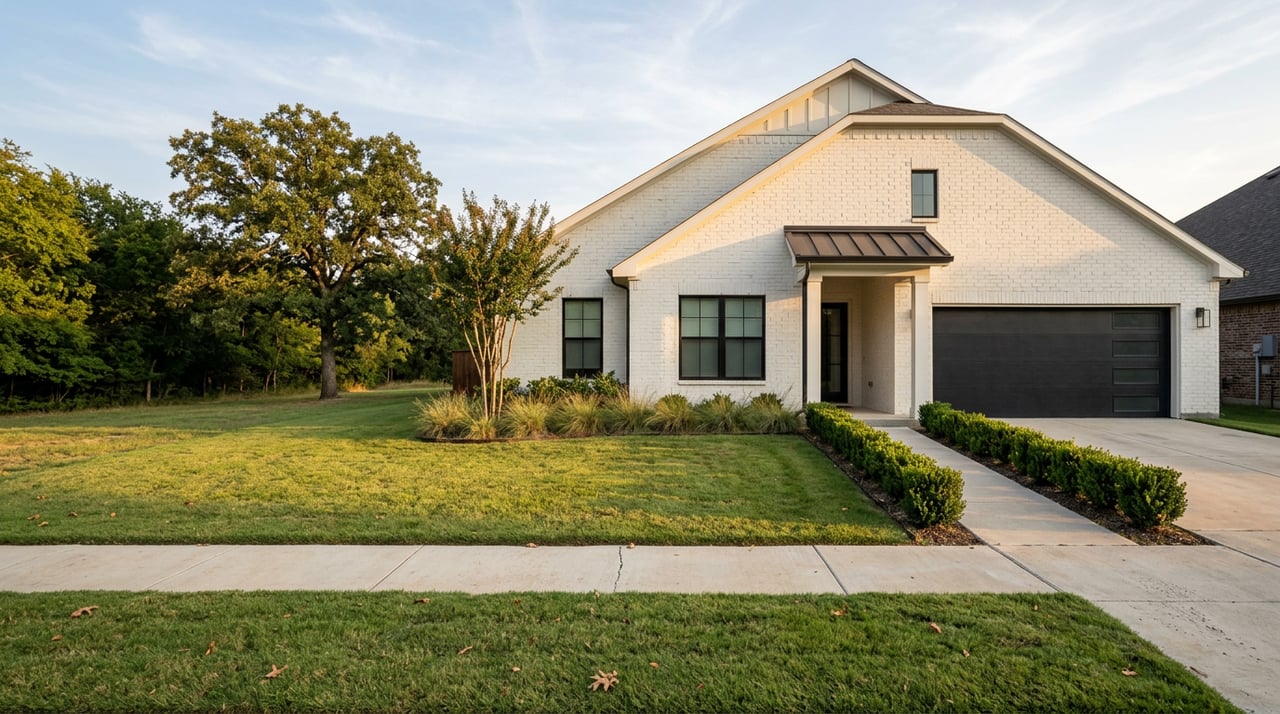
Most suburbs get their retail the way you'd expect: rooftops go up, shoppers move in, and eventually a grocery chain or a national retailer notices the traffic counts and signs a lease. South Broken Arrow did it the other way. The city spent roughly a decade treating new-home construction along the Creek Turnpike corridor as infrastructure for a retail deal it hadn't landed yet, and the deal only closed once the rooftop count got high enough to make the numbers work.
That order of operations matters if you're comparing South Broken Arrow to Bixby, Owasso, or Jenks for a new-construction purchase. The subdivisions going up along Aspen Avenue and County Line Road weren't built because builders spotted organic demand and raced to meet it. They were built, in part, because the city needed the population to justify a nine-figure retail investment, and it said so on the record.
City Manager Michael Spurgeon made the strategy explicit at the August 2025 groundbreaking for Hackberry Market, the $98 million retail development that will bring Home Depot, Hobby Lobby, TJ Maxx, and Burlington to the northeast corner of Aspen Avenue and Tucson Street.
"For the past 15 years, the city has focused on trying to attract significant commercial and retail investments to south Broken Arrow," Spurgeon said, adding that since 2016 the area had added 2,500 new single-family homes and roughly 875 new apartments, alongside a 35 percent increase in Creek Turnpike traffic counts since 2015.
Read that carefully. The city didn't cite school ratings or quality of life scores as the case for Hackberry Market. It cited a housing unit count and a traffic count, because those were the two numbers a retail developer needed to see before committing capital.
The Math That Got a TIF District Approved
Hackberry Market runs on a sales-tax-only tax increment financing district, TIF District No. 6, which the city established specifically to cover the infrastructure the site needed: water, sewer, streets, stormwater, and landscaping. Under that structure, existing baseline property and sales taxes are unaffected, but the incremental sales tax the new retailers generate gets redirected toward those infrastructure costs for the life of the district. The city's own projections put that at roughly $120.5 million in sales and use tax revenue over the TIF's 25-year term, on top of an estimated $27.4 million in additional property tax revenue outside the TIF, money the city has said will help fund schools, libraries, and county services.
None of that math works without rooftops already in place. A TIF district is a bet that future consumer spending will justify the upfront infrastructure spend, and consumer spending requires people who already live nearby. The 2,500 homes built since 2016 weren't a byproduct of Hackberry Market. They were the collateral that made Hackberry Market financeable.
If you're shopping new construction in this corridor, that changes what the subdivision actually represents. You're not buying into a neighborhood that retail happened to notice. You're buying into a neighborhood the city built specifically to be noticed.
What That Means for the Community You're Actually Choosing Between
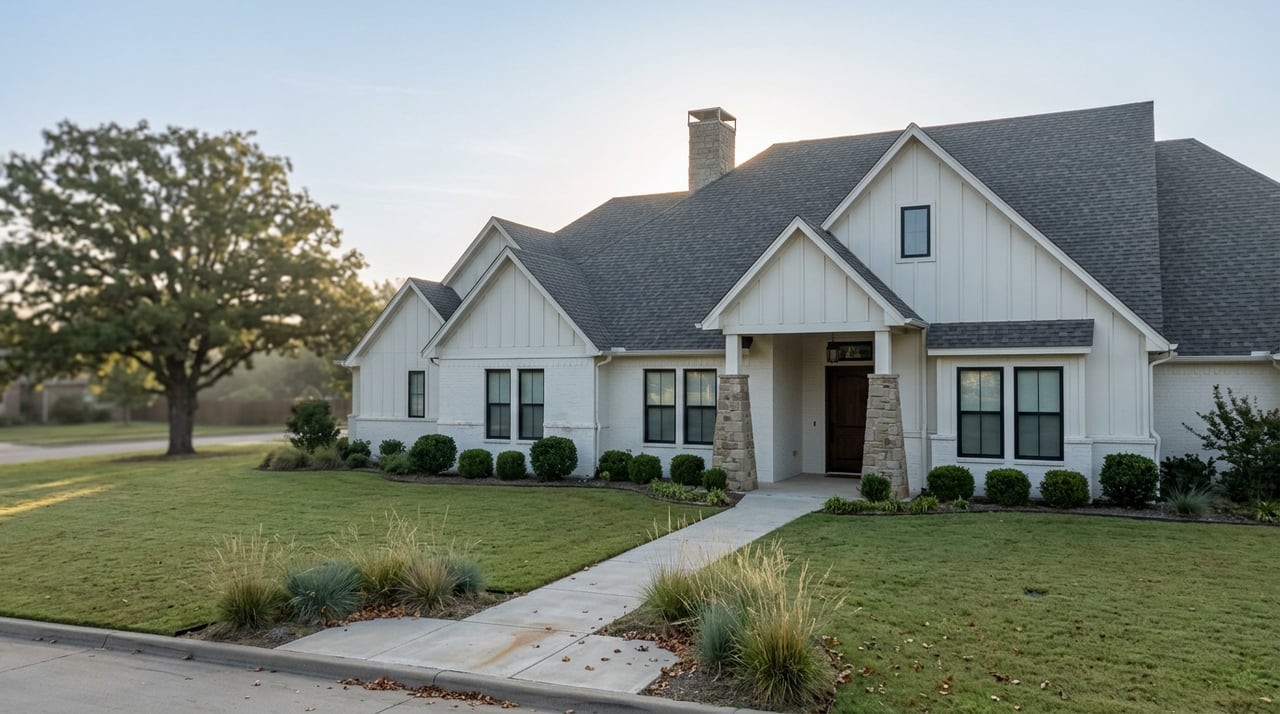
The rooftop strategy didn't produce one kind of house. It produced several, stacked at different price points along the same few miles of road, because different builders were filling different rungs of the same pipeline the city needed to hit.
At the upper end, Butler Homes is building Creekside II inside the Forest Ridge master-planned community, where new homes run from $450,000 to $650,000 for custom and semi-custom product on larger, greenbelt-adjacent lots. Buyers there get private fishing lakes, nature trails, resident-only parks, and a discounted membership at Forest Ridge Golf Club, the kind of amenity package that signals a slower, more deliberate build.
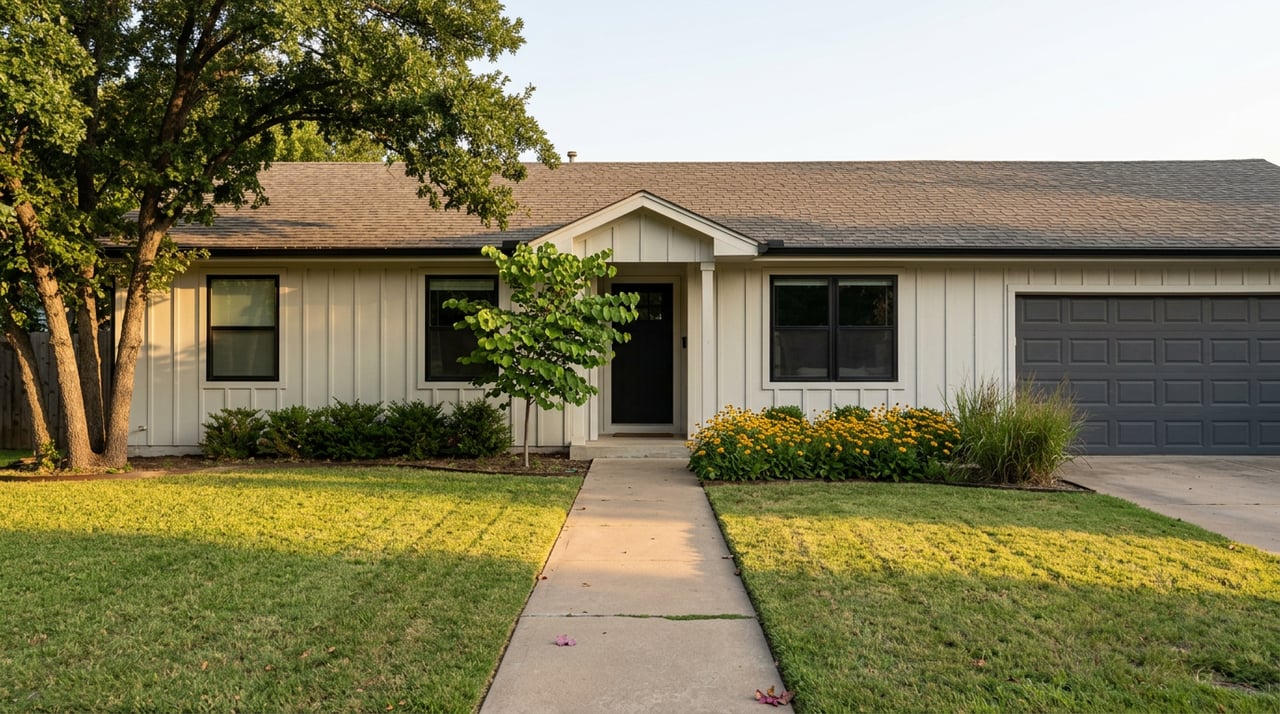
A few minutes away, the volume end of the pipeline looks different. Schuber Mitchell's Whiskey Ridge sits at 31st Street and County Line Road, about 1.2 miles from the Creek Turnpike, and leans on a pool, pickleball courts, and a community clubhouse rather than acreage. Simmons Homes' Pine Valley Ranch, also in the corridor, pitches itself on affordability paired with Energy Star certification, and Capital Homes has Elm Creek positioned as a starter-home community for first-time buyers.
None of these communities are competing with each other in the way two homes on the same street compete. They're each capturing a different slice of the rooftop count the city needed, at a price point calibrated to move volume quickly. That's worth knowing before you assume "new construction in South Broken Arrow" is one product. It's several products, priced and amenitized differently, built by different companies working from the same underlying growth math.
Reading a Builder's Incentive Sheet Here
Because these builders are protecting long-term subdivision values in a corridor the city is actively marketing to retailers, they tend to negotiate through incentives rather than price cuts. Butler Homes, for example, advertises up to $10,000 in closing cost and rate buy-down assistance on available Creekside II homes when buyers use a Butler Homes preferred lender, on top of a separate parade-of-homes credit for design selections.
That pattern holds across new construction in the Tulsa metro generally. Builders here commonly structure incentives as rate buydowns, closing cost credits, or design-center allowances worth somewhere in the $10,000 to $25,000 range, rather than lowering the advertised price of the home itself. The logic is straightforward: a builder who cuts the base price on one lot resets the comparable sale for every other lot in the subdivision, including the ones the builder hasn't sold yet. A rate buydown or a credit toward options achieves the same effect for your monthly payment without touching that number.
If you're evaluating an offer in this corridor, ask whether the buydown is temporary or permanent, whether it requires the builder's preferred lender, and what the payment looks like once a temporary buydown expires. Those questions matter everywhere new construction is sold, but they matter more in a corridor where the builder has an extra incentive, the city's own retail pipeline, to keep subdivision values from softening.
The Two Dates on the Calendar That Matter More Than the Season
Buyers are used to thinking about spring and fall as the seasons that move a market. In South Broken Arrow, one closing infrastructure chapter and one still-open retail milestone carry more weight than either season.
By early 2026, two projects that had been under construction for years were finally closing out. A February 2026 city update reported the Houston Street widening project, running from Garnett Road to Olive Avenue, was nearing completion, with contractor Becco Contractors laying the final asphalt and striping on a five-lane roadway that now includes a 10-foot concrete trail and a four-foot sidewalk. The same update said Belt Construction was days from finishing Phase 2 of the County Line Trunk Sewer Project, replacing one of the city's oldest gravity sanitary sewer lines in the same south Broken Arrow footprint. Both projects have had the runway to wrap since then.
What hasn't closed out yet is Hackberry Market itself. As of an April 2026 progress update, the development was still expected to open in late 2026, roughly fifteen months after its August 2025 groundbreaking, which puts the opening somewhere in the next few months from today.
That sequence, not a generic spring buying season, describes the actual arc of this corridor. A home purchased now is a purchase made in a neighborhood that has already finished the road and sewer work but is still waiting on its anchor retail to open its doors. A home purchased after Hackberry Market opens gets a corridor that has fully delivered on the case the city spent fifteen years building. Neither timing is wrong. They're just different bets, and knowing which one you're making is the point.
A Couple of Questions Worth Asking Before You Sign
Does buying before Hackberry Market opens guarantee a better price? No. Retail typically follows rooftops here rather than the other way around, and there's no fixed rule that prices rise once a shopping center opens. What buying now does guarantee is a corridor with its road and sewer work already finished but its anchor retail still a few months from opening its doors. Weigh that against the current builder incentives on the table, not against a price move that hasn't happened yet.
Is every "South Broken Arrow" new-construction community built to the same standard? No, and that's the point of this piece. Communities inside the same few square miles range from production-scale, amenity-light starter homes to semi-custom builds on greenbelt lots with private lakes and golf access. The right one depends on what you're actually optimizing for: price, lot size, or amenities, not proximity to the turnpike alone.
New construction in a corridor built on a city's own economic development math is a different kind of purchase than new construction in an organically growing suburb. The lot selection, the builder's incentive structure, and the timing all read differently once you know the retail was engineered to arrive after the homes, not before them.
If you're weighing South Broken Arrow against another South Tulsa suburb for your next build, Brandi True can walk through the builder options, the current incentive packages, and the infrastructure timeline together, so you know exactly which bet you're making before you sign a contract. Let's Connect.